
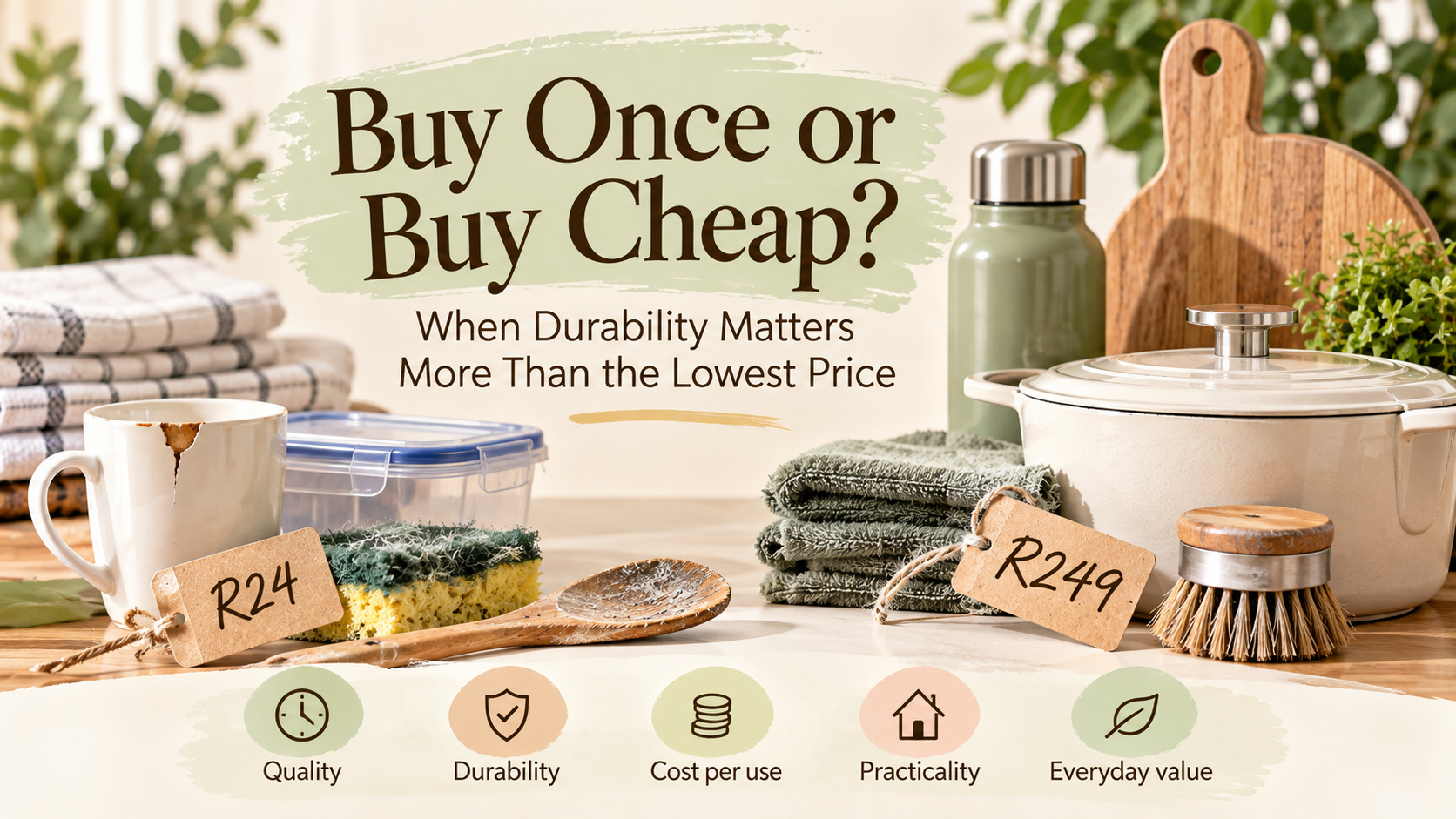
Sometimes buying the cheapest option is exactly the right decision. Other times, a product that costs a little more upfront can save you from repeatedly replacing something that doesn’t last.
But there’s another side to this: expensive doesn’t automatically mean better.
When money is tight, choosing between the cheapest product and something that promises better quality isn’t always straightforward. The real question is whether the extra money buys you something useful, or whether you’re simply paying more for a name.
Quick takeaway
Don’t judge value by the price tag alone. Consider how often you’ll use the product, how long it’s reasonably expected to last, what it costs to maintain and whether the more expensive option actually offers a meaningful benefit.
A higher upfront cost is only worthwhile when the improvement justifies the extra spending and fits your budget.
Why the Cheapest Option Isn't Always the Cheapest
Imagine you're choosing between two products that perform the same job.
Example (illustrative prices, not current store offers):
1. Product A works out to R20 per month.
2. Product B works out to R12.50 per month.
Over two years, replacing Product A every six months would cost R480, compared with R300 for Product B.
That’s a potential saving of R180.
However, this comparison only works if the products genuinely last that long and perform equally well. An expensive product that fails early could end up being the worse purchase.
When Spending More Can Make Sense
Paying more may be worthwhile for products you use frequently or rely on heavily.
Examples include:
1. Everyday shoes: Comfort, fit, construction and expected wear can matter more than the lowest price.
2. Frequently used kitchen appliances: Reliability, suitable capacity and replacement-part availability may justify a higher price.
3. Cleaning equipment: A durable mop, broom or reusable tool may cost less over time than replacing poorly made alternatives.
4. Work equipment: A product you depend on to earn money deserves closer attention to reliability and downtime.
Before paying more, look for evidence of better construction, useful features, warranty support or a meaningful improvement in performance.
When Buying Cheap Is the Smarter Choice
Not everything needs to last for years, and sometimes the affordable option is more than adequate.
Buying cheaper may make sense when:
1. You only need the item occasionally.
2. Both options perform equally well for your needs.
3. The premium version offers features you’ll never use.
4. You haven’t established whether you’ll use the item regularly.
5. Spending more would interfere with essential household expenses.
A budget-friendly product that does the job properly isn’t a compromise just because it costs less.
Don’t spend money you cannot comfortably spare simply because something might save money in the future.
How to Check Whether a Product Is Worth More
Before paying extra, consider these questions.
Build quality: Does the more expensive product have noticeably better materials or construction?
Reviews: Do independent buyers report consistent problems or advantages? Look for repeated patterns rather than relying only on star ratings.
Warranty and returns: What is actually covered, for how long, and what would a repair or return involve?
Maintenance: Does the product require expensive replacement parts, accessories, filters or consumables?
Practicality: Are you paying for a genuine benefit, or features that don’t suit your household?
Repairability: Can a common fault be repaired economically, or would the entire product need replacing?
Remember that a warranty is not proof of how long a product will last.
Compare the Total Cost, Not Just the Purchase Price
The shelf price is only one part of the decision.
Consider:
- Purchase price
- Delivery or collection costs
- Replacement accessories and consumables
- Electricity or other running costs where relevant
- Likely repair and maintenance expenses
- Potential replacement frequency
A low-priced appliance with expensive consumables may cost more to operate than another model. Equally, a premium appliance with no meaningful running-cost advantage might never justify its higher purchase price.
Compare products that meet the same requirements, and don’t assume a saving until you have evidence.
Know When to Wait
Sometimes the smartest purchase is no purchase at all.
If the item you already own is still working, consider whether replacing it now offers a genuine benefit.
For non-urgent purchases, you may be able to:
- Compare several retailers.
- Research the exact model.
- Save towards a better-supported purchase.
- Wait for a verified discount.
- Repair or maintain what you already own.
A discounted product isn’t saving you money if you didn’t need to buy it in the first place.
Chelsea’s Value Check ✓
✓ Worth It – Paying more can be worthwhile when there’s credible evidence of better durability, reliability or performance, and the additional cost fits your budget.
~ Depends – A cheaper and more expensive product may both offer reasonable value. Your usage, finances, maintenance requirements and expected lifespan determine the better choice.
× Skip – Avoid paying a premium based only on branding, attractive packaging, unsupported durability claims or features you won’t use.
These are buying principles, not ratings of specific products. Individual products must still be assessed on their own merits.
Quick checklist
- Do I genuinely need this product now?
- Will I use it regularly enough to justify the price?
- Is there credible evidence that the more expensive version performs better or lasts longer?
- Have I considered repairs, running costs and replacement parts?
- Have I compared similar products from different brands?
- Can I comfortably afford it without affecting essentials?
- Would keeping, maintaining or repairing my current item be a better option?
Keep reading
How Chelsea’s Finds Works: What Gets a ✓ Worth It — Learn how products are evaluated before receiving a recommendation.
Bulk Buy or Skip? When Bigger Packs Actually Save Money — Discover why buying more doesn’t always mean getting better value.
At Chelsea’s Home & Budget, the goal isn’t to recommend the cheapest product or the most expensive one. It’s to help you recognise genuine value and avoid spending money where it doesn’t make a meaningful difference.
Leave a Reply