Chelsea’s Budget Club — Members-only report Reporting week: Monday 16 November – Sunday 22 November 2026 Research period: 14–16 November 2026, with prices and availability checked against the relevant promotional periods. Coverage: National retailers, selected Gauteng suppliers and online grocery retailers. Welcome to this week’s grocery and bulk-buying comparison. With Black Friday approaching on Friday…
Author: Chelsea
-
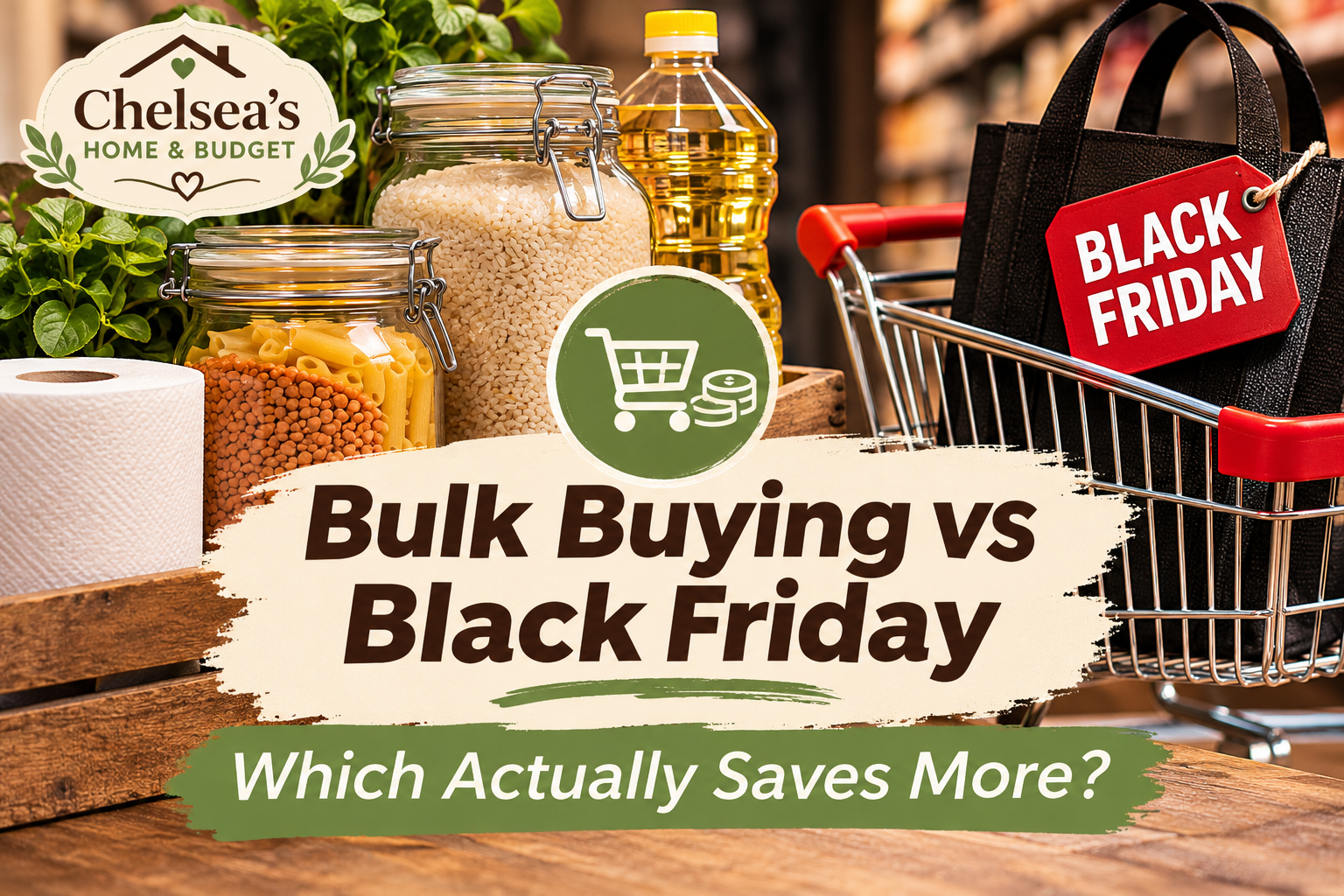
Bulk Buying vs Black Friday: Which Actually Saves More?
Black Friday is often advertised as the perfect time to stock up on household essentials. But is a supermarket’s big November special really cheaper than buying in bulk?
Sometimes it is. Sometimes a wholesaler’s everyday price is better.
And sometimes buying a bigger pack means spending more money without getting better value.
For South African households trying to stretch their grocery budgets, knowing the difference can make a meaningful impact.
At Chelsea’s Home & Budget, we’re not choosing sides between supermarkets and bulk retailers. We’re comparing what each option actually costs and whether it makes sense for your household.
Quick Takeaway
Bulk buying isn’t automatically cheaper, and Black Friday doesn’t automatically offer the best price.
Before choosing between them, consider:
- The price per kilogram, litre or unit.
- Whether the products are genuinely comparable.
- How much money you need upfront.
- How long the products will last in your household.
- Storage, delivery and travelling costs.
- Whether you already have enough stock at home.
The best deal is the one that gives you the most useful value for your money — not necessarily the biggest pack.
1. Does a bigger pack actually cost less?
One of the easiest mistakes when buying in bulk is assuming that larger packaging means better value.
Let’s look at a simple example using rice.
Pack size Price Price per kg 2 kg R58 R29 5 kg R130 R26 10 kg R270 R27 Illustrative prices only — not current retailer offers.
Surprisingly, the 10 kg bag isn’t the cheapest option per kilogram.
Buying two 5 kg bags would cost R260 for the same total weight, compared with R270 for the single 10 kg bag.
That’s R10 less for the same quantity.
The difference might look small, but comparing unit prices across several household products can help prevent unnecessary spending.
This is why we should calculate the real cost before choosing a bulk pack.
2. How to calculate the price per unit
You don’t need complicated calculations.
Simply divide the selling price by the quantity.
Price per kilogram = Total price ÷ Weight in kilograms
For example:
R130 ÷ 5 kg = R26 per kilogram.
The same idea applies to liquids, multipacks and household products.
For toilet paper, compare the roll size and number of sheets rather than assuming every roll offers the same quantity.
For washing powder, consider the amount required per wash, especially when comparing concentrated and ordinary detergents.
Chelsea’s Budget Tip: Keep a small record of prices for the household essentials you regularly buy. You don’t need to track everything — even knowing the usual price of rice, cooking oil, washing powder and toilet paper can make comparisons much easier.
3. When buying in bulk makes sense
Bulk buying can be useful when you’re purchasing products your household regularly consumes.
Good candidates to investigate include:
- Rice, maize meal, pasta and dried legumes.
- Cooking oil and selected long-life groceries.
- Washing powder and dishwashing products.
- Toilet paper and toiletries.
- Pet food and other frequently used supplies.
The advantage isn’t always limited to a lower price.
Having extra stock available could mean fewer shopping trips and less pressure to purchase an essential at a higher price later.
But that only works if you can afford the quantity and store it properly.
Buying three months’ worth of something when you only have enough money for this month’s necessities isn’t necessarily a good decision, even if the unit price is excellent.
4. When Black Friday specials are the better option
Sometimes a supermarket’s limited-time promotion beats a bulk retailer’s ordinary price.
For example, a smaller pack may be heavily discounted while the larger pack remains at its normal selling price.
This is especially worth checking when retailers run loyalty-card promotions, multibuys or temporary reductions on everyday essentials.
But be careful with the conditions.
A deal that requires you to buy four items isn’t necessarily worthwhile when you only need one.
Similarly, a special that applies exclusively to selected stores might not justify an additional shopping trip.
Compare the total quantity you need, rather than simply choosing the product with the largest advertised discount.
5. Don’t forget what it costs to reach the store
Imagine finding a bulk offer that saves you R20 compared with a nearby supermarket.
That sounds useful.
But what if collecting it requires an additional R35 in fuel?
Your R20 product saving has effectively become R15 in extra spending.
This is an illustrative calculation, not a current store comparison.
It doesn’t mean distant shops are always a poor choice. You might save substantially more by purchasing several items together.
The point is to compare the overall shopping trip.
Before driving to a wholesaler or visiting several supermarkets, ask whether you can combine purchases and whether the total saving is worth the journey.
6. Storage and waste can cancel out a saving
Bulk buying works best when the products can be stored safely and used before they deteriorate.
Dry groceries need suitable storage to protect them from moisture and pests.
Cleaning products should remain properly sealed and stored according to their labels.
Fresh produce requires more careful planning.
A large bag of potatoes might look like exceptional value per kilogram, but if a substantial portion spoils before your household can use it, the effective cost rises.
For smaller households, buying less more frequently may sometimes be the better choice.
A bargain only helps when you can actually use what you’ve bought.
7. What about meat hampers?
Meat hampers deserve a separate kind of comparison.
Two hampers might both contain 10 kg of meat but offer very different value.
One could contain mostly bone-in chicken, while another includes beef, pork, mince and other cuts.
We need to consider:
- Which cuts are included.
- Whether the advertised weight includes substantial bone.
- The price of purchasing comparable cuts separately.
- Whether your household will use everything.
- Freezer space and any delivery charges.
That’s why we’ll be examining selected bulk butchery specials and meat hampers in more detail throughout Black November.
8. Build a household stock-up plan
Before buying large quantities, divide your shopping needs into three groups.
1. Buy now
Essentials you’re running short of and genuinely need for the coming weeks.
2. Stock up when the value is convincing
Products you use regularly, have space to store and can purchase without compromising other necessities.
3. Leave for another month
Products you already have sufficient stock of or that aren’t offering meaningful savings.
One of the most useful benefits of bulk buying is having supplies left over for a more difficult month.
If you’ve already stocked up successfully, there’s no reason to keep buying more simply because another promotion appears.
Chelsea’s Budget Tip: Let your extra stock carry forward. A cupboard containing next month’s essentials can be just as valuable as finding another discounted product today.
Chelsea’s Value Check ✓
Here’s how we’ll assess bulk-buying opportunities throughout Black November.
✓ Worth it
The quantity offers a convincing cost advantage, suits your household and can be purchased without compromising other essentials.
~ Depends
The unit price is competitive, but the bulk quantity, upfront cost, travelling distance or storage requirements may not suit everyone.
× Skip
The larger pack costs more per comparable unit, encourages unnecessary spending or is likely to create waste.
Want the full grocery and bulk-price comparisons?
Throughout November, Chelsea’s Home & Budget will investigate selected supermarkets, wholesalers, cash-and-carry retailers and bulk suppliers.
Our free articles will highlight worthwhile findings and practical ways to compare offers.
For readers who want more detail, Chelsea’s Budget Club provides fuller store comparisons, calculated unit prices and selected household and meat-special reports as they become available.
The first month is free, followed by R50 per month until cancelled.
One final thought
Buying more doesn’t automatically mean saving more.
Sometimes the best deal is a large pack from a wholesaler.
Sometimes it’s a smaller supermarket special.
And sometimes it’s making use of what you already have instead of spending anything extra.
The best value comes from buying the right quantity, at the right price, for your household’s actual needs.
That’s what we want every Chelsea’s Home & Budget comparison to help you discover.
All numerical price examples in this article are illustrative and do not represent current retailer offers. Actual prices, product specifications, promotion conditions and availability should be confirmed directly with retailers before purchasing.
-

Black Friday 2026 in South Africa: How to Spot Real Savings
Black Friday is almost here, and with it come the big red discount signs, limited-time offers and promises of unbelievable savings.
But here’s something worth remembering: just because something is on sale doesn’t mean you’re getting a good deal.
For many South African households, November is an opportunity to stock up on groceries, cleaning products and everyday essentials before the festive season.
The problem? A tempting special can easily turn into money spent on something you didn’t actually need.
At Chelsea’s Home & Budget, we’re approaching Black Friday differently. We’re not interested in how big a discount looks on a poster. We want to know what you’re actually getting for your money.
Quick Takeaway
Black Friday 2026 falls on Friday, 27 November, although some South African retailers run promotions throughout November.
Before buying something advertised as a special, ask yourself:
- Is it genuinely cheaper than the usual price?
- Could I get the same or a comparable product cheaper elsewhere?
- Am I comparing the same quantity and quality?
- Will delivery, fuel or other costs affect the saving?
- Is this something my household actually needs?
A real saving should help your household spending go further, not simply encourage you to buy more.
1. A big discount doesn’t always mean a good price
Imagine seeing a cleaning product advertised at 40% off.
Sounds promising, doesn’t it?
But what was that product selling for before the promotion? And what if another store offers a comparable product at an even lower everyday price?
That’s why we shouldn’t rely on the advertised discount percentage alone.
Where possible, compare the promotion against an earlier catalogue, a recent receipt or another retailer’s price.
Pay particular attention to the exact brand, size and product specification.
Chelsea’s Budget Tip: If you regularly buy certain household essentials, start paying attention to their ordinary prices. Knowing what something normally costs makes it easier to recognise a genuine bargain when one appears.
2. Compare the quantity, not just the shelf price
One of the easiest ways to get caught by a special is to compare products of different sizes.
A smaller bottle may have a lower price tag, but the larger bottle might cost less per litre.
The opposite can also happen.
When comparing grocery and household specials, look at the:
- Price per kilogram for dry groceries and meat.
- Price per litre for liquids.
- Price per roll or sheet count for toilet paper.
- Price per item for multipacks and toiletries.
Remember that quality and product type matter too. Two products aren’t necessarily equivalent just because they weigh the same.
We’ll explore these comparisons in greater detail in our separate guide to bulk buying versus Black Friday specials.
3. Check the conditions behind the special
Sometimes the advertised price is only available under particular conditions.
Before making a special trip or adding an item to your trolley, check whether the offer:
- Requires a loyalty card or store membership.
- Applies only when buying several items.
- Is restricted to selected branches or online orders.
- Has a minimum-spend requirement.
- Excludes delivery charges.
- Ends before your planned shopping day.
These details matter, especially when you’re comparing several stores.
A cheaper product across town might not save you much once you’ve paid for the extra journey.
The best shopping plan isn’t necessarily the one with the most stops.
4. Don’t overlook wholesalers and bulk retailers
Black Friday isn’t the only opportunity to buy household essentials for less.
Sometimes a wholesaler or cash-and-carry store offers better everyday value than a supermarket’s advertised promotion.
This is worth investigating for regularly used products such as rice, maize meal, pasta, cooking oil, washing powder and toilet paper.
But buying in bulk isn’t automatically the best decision.
A larger pack may require more money upfront, additional storage space or quantities your household cannot reasonably use.
Fresh produce can be particularly risky if it deteriorates before you finish it.
For meat hampers, we also need to consider the cuts included, bone content and whether the hamper suits your usual meals.
A good bulk purchase should provide value without creating waste or leaving you short of money for other essentials.
5. Make a Black Friday shopping list before the specials tempt you
One of the simplest ways to avoid unnecessary purchases is to decide what you need before you start browsing promotions.
Start with three groups:
Essentials you need anyway
These are the groceries, toiletries and household products already on your shopping list.
Products worth stocking up on
These are regularly used items where a verified saving could help you carry extra stock into another month.
Things that can wait
These are products you’re considering mainly because they’re discounted.
There’s nothing wrong with buying something enjoyable when you can comfortably afford it. The important part is making a conscious decision rather than letting a countdown timer or discount banner decide for you.
And remember: December is just around the corner. A November bargain shouldn’t make the following month unnecessarily difficult.
6. Our five-question Black Friday check
Before paying, run through this quick assessment.
- Would I have considered buying this without the sale?
- Have I compared the actual price against alternatives?
- Am I getting a useful quantity at a competitive unit price?
- Have I included delivery, travel and any promotion conditions?
- Will this purchase still make sense for my household next month?
If you can answer those questions confidently, you’re in a much better position to judge the offer.
And if the answers aren’t convincing, there’s nothing wrong with walking away.
Chelsea’s Value Check ✓
Throughout Black November, we’ll assess selected promotions using three simple outcomes.
✓ Worth it
A convincing value advantage on something useful, with reasonable purchase conditions.
~ Depends
An offer that could be worthwhile depending on your household’s needs, location, storage space or available alternatives.
× Skip
A promotion that doesn’t provide a convincing advantage, encourages unnecessary spending or works out poorly compared with another option.
These assessments will be based on the information we can verify, not simply the advertised discount percentage.
What Chelsea’s Home & Budget will be checking this November
Our Black November coverage will focus on the products that matter to ordinary South African households.
We’ll investigate supermarket grocery specials, wholesalers, cash-and-carry stores, meat hampers, cleaning products, toiletries and bulk-buying opportunities.
Where reliable information is available, we’ll compare equivalent quantities, promotion periods, retailer conditions and actual prices.
Our free articles will share selected findings, explain what makes a deal worthwhile and highlight offers worth investigating.
For readers who want more detail, Chelsea’s Budget Club offers fuller grocery and household comparisons, unit-price calculations and selected meat-special reports as they become available.
The first month is free, followed by R50 per month until cancelled.
One final thought
You don’t have to buy something just because it’s Black Friday.
Sometimes the best saving is finding an everyday essential at a genuinely lower price.
Sometimes it’s choosing the smaller pack.
And sometimes it’s deciding that a special simply isn’t worth your money.
Real savings aren’t about how much you spend during a sale. They’re about getting better value from what you actually need to buy.
That’s what Chelsea’s Home & Budget is here to help you find.
Black Friday 2026 takes place on Friday, 27 November. Retailer prices, promotion conditions and stock availability may change. Always confirm current offers directly with the retailer before purchasing..
-
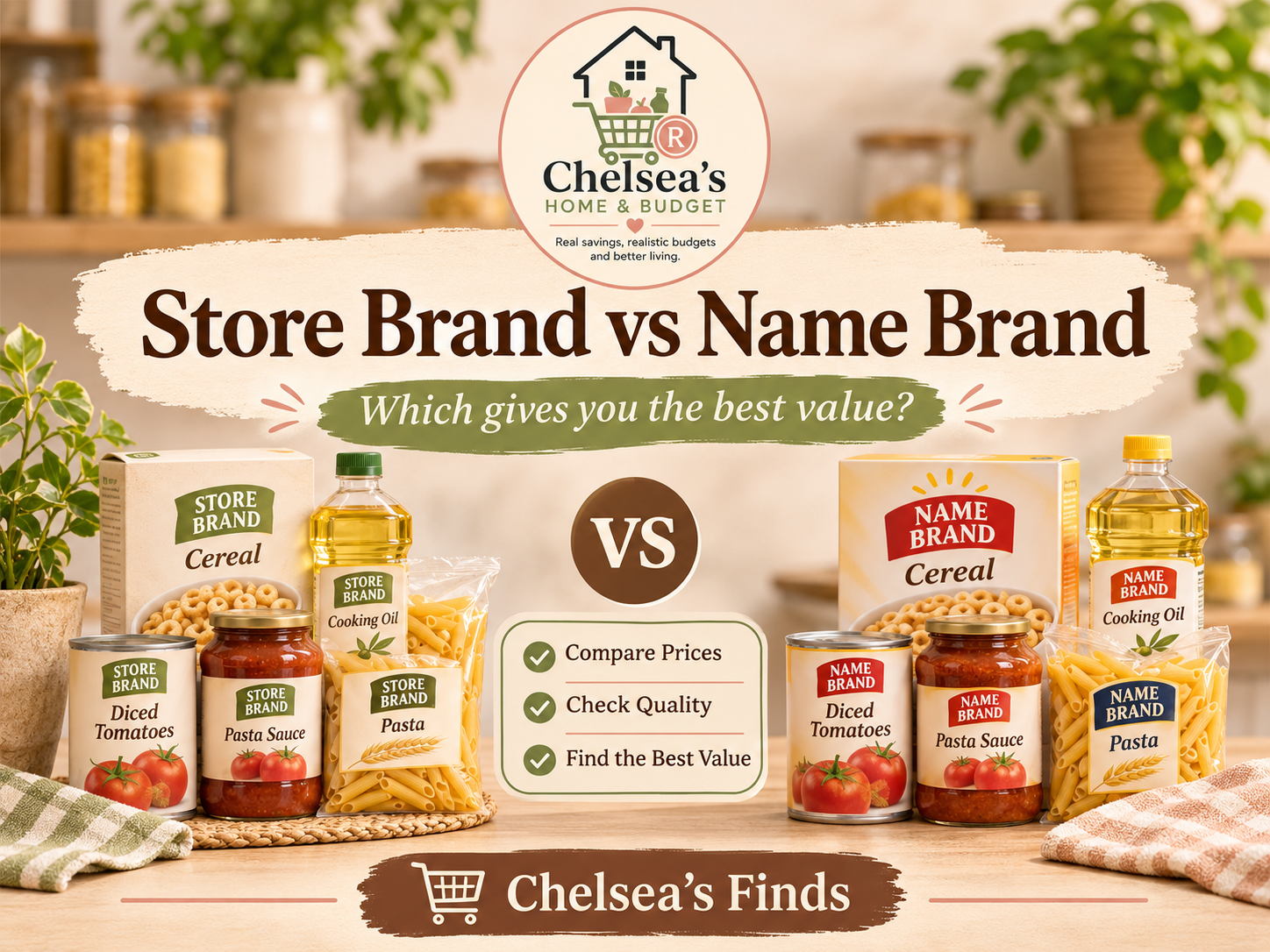
Store Brand vs Name Brand: When Is the Premium Worth It?
A familiar brand can feel like the safer choice, especially when a product has worked for your household for years. But when the grocery bill keeps climbing, it is worth asking what the extra money is actually buying.
Sometimes it buys a particular ingredient, a better result or a product you genuinely prefer. Other times, a less expensive alternative can do the same job. The goal isn’t to avoid brands. It’s to spend deliberately.
Quick takeawayDon't compare prices until you know you're comparing products that do the same job. Look at the pack size, unit cost, ingredients, amount used and the result you need. A cheaper price tag is only one part of the decision.Start with a fair comparisonBegin with two products designed for the same purpose.For example, compare ordinary white rice with ordinary white rice, rather than comparing it with an aromatic or speciality variety. Check the price per kilogram, not just the price displayed on the shelf.Not every similarly named product is equivalent, either. A 25% fat spread and a 40% fat spread can differ in ingredients, texture and suitability for cooking. One isn't automatically better value simply because it costs less.Work out the cost of actually using itSome products look inexpensive because the pack is cheap, but cost more once you use them.Washing powder is a good example. A large bag might look like a bargain, but what matters is the recommended dosage, the number of washes it provides and whether it cleans effectively.The same thinking applies to rice and pasta. Does the product cook the way your household needs it to? Does it create waste? Does the more expensive alternative provide a meaningful benefit?Those are questions worth answering before deciding.Know when paying more makes senseA more expensive product can still be worthwhile if it lasts longer, performs reliably, suits your household's needs or gives a result you value.Conversely, a budget alternative may be perfectly adequate for everyday use.Neither decision is automatically wrong. What matters is whether the additional cost provides an actual benefit.Chelsea’s Value Check ✓✓ Worth It: A lower-cost alternative is genuinely comparable, meets your needs and costs less per useful unit or use.~ Depends: Differences in ingredients, quality, performance or convenience make the better choice household-specific.× Skip: The apparent bargain costs more per useful use, creates waste or doesn't suit its intended purpose.? Unverified: There isn't enough reliable information yet to make a fair recommendation.Quick checklist before switching brands
- Are the products the same type and intended for the same use?
- What is the cost per kilogram, litre, item or wash?
- Do the ingredients or instructions differ?
- Will the cheaper product perform adequately for your household?
- Can you use the full pack without waste?
Keep readingIf you'd like to make more confident shopping decisions, read How to Tell Whether a Special Is Actually a Good Deal and Bulk Buy or Skip? When Bigger Packs Actually Save Money.Next in this series, we’ll examine whether paying more for a particular brand of rice makes a meaningful difference.
-
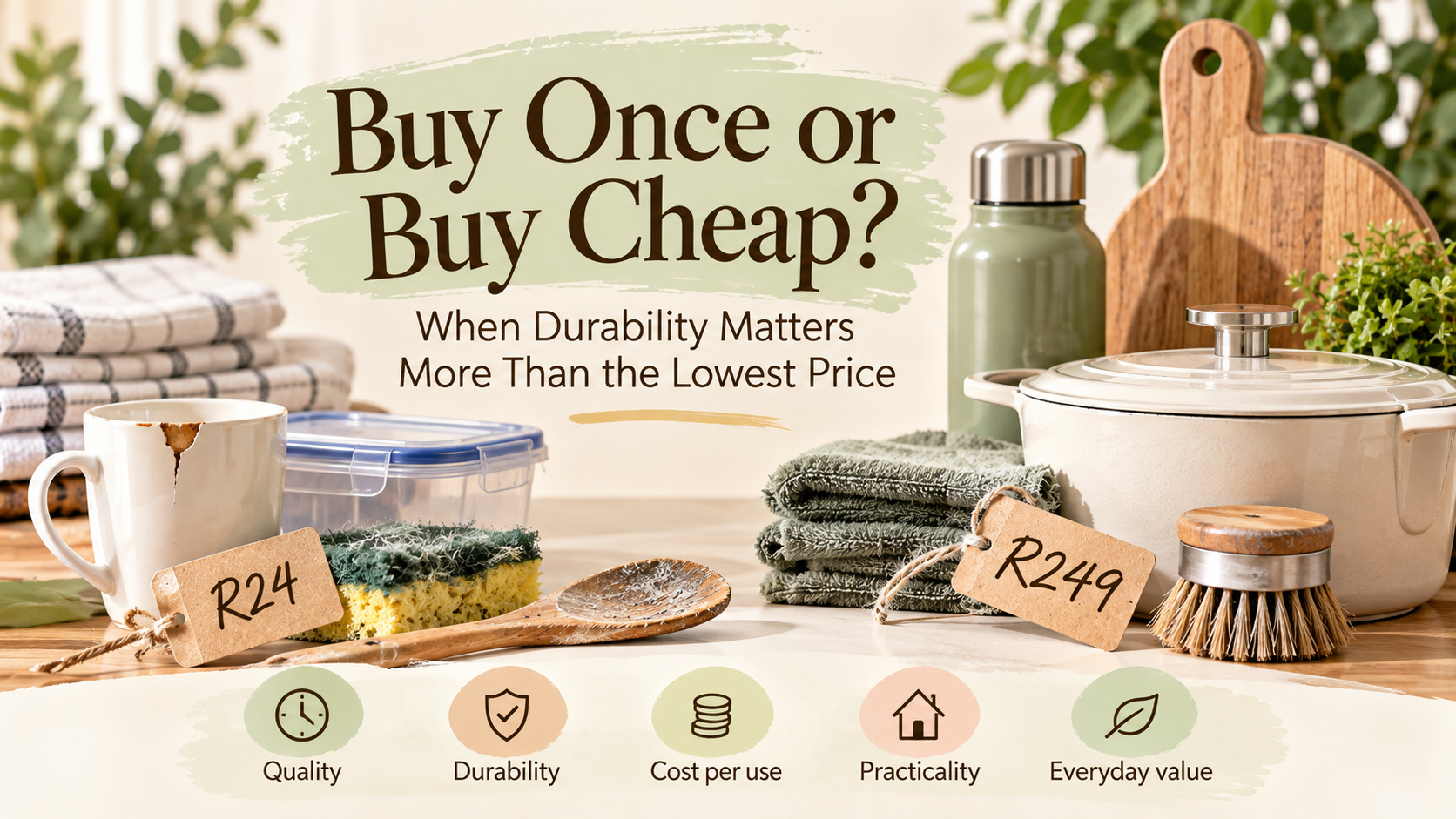
Buy Once or Buy Cheap? When Durability Matters More Than the Lowest Price
Sometimes buying the cheapest option is exactly the right decision. Other times, a product that costs a little more upfront can save you from repeatedly replacing something that doesn’t last.
But there’s another side to this: expensive doesn’t automatically mean better.
When money is tight, choosing between the cheapest product and something that promises better quality isn’t always straightforward. The real question is whether the extra money buys you something useful, or whether you’re simply paying more for a name.
Quick takeawayDon’t judge value by the price tag alone. Consider how often you’ll use the product, how long it’s reasonably expected to last, what it costs to maintain and whether the more expensive option actually offers a meaningful benefit.
A higher upfront cost is only worthwhile when the improvement justifies the extra spending and fits your budget.
Why the Cheapest Option Isn't Always the CheapestImagine you're choosing between two products that perform the same job.Example (illustrative prices, not current store offers):
1. Product A works out to R20 per month.
2. Product B works out to R12.50 per month.
Over two years, replacing Product A every six months would cost R480, compared with R300 for Product B.
That’s a potential saving of R180.
However, this comparison only works if the products genuinely last that long and perform equally well. An expensive product that fails early could end up being the worse purchase.
When Spending More Can Make SensePaying more may be worthwhile for products you use frequently or rely on heavily.Examples include:
1. Everyday shoes: Comfort, fit, construction and expected wear can matter more than the lowest price.
2. Frequently used kitchen appliances: Reliability, suitable capacity and replacement-part availability may justify a higher price.
3. Cleaning equipment: A durable mop, broom or reusable tool may cost less over time than replacing poorly made alternatives.
4. Work equipment: A product you depend on to earn money deserves closer attention to reliability and downtime.
Before paying more, look for evidence of better construction, useful features, warranty support or a meaningful improvement in performance.
When Buying Cheap Is the Smarter ChoiceNot everything needs to last for years, and sometimes the affordable option is more than adequate.Buying cheaper may make sense when:
1. You only need the item occasionally.
2. Both options perform equally well for your needs.
3. The premium version offers features you’ll never use.
4. You haven’t established whether you’ll use the item regularly.
5. Spending more would interfere with essential household expenses.A budget-friendly product that does the job properly isn’t a compromise just because it costs less.
Don’t spend money you cannot comfortably spare simply because something might save money in the future.
How to Check Whether a Product Is Worth MoreBefore paying extra, consider these questions.
Build quality: Does the more expensive product have noticeably better materials or construction?
Reviews: Do independent buyers report consistent problems or advantages? Look for repeated patterns rather than relying only on star ratings.
Warranty and returns: What is actually covered, for how long, and what would a repair or return involve?
Maintenance: Does the product require expensive replacement parts, accessories, filters or consumables?
Practicality: Are you paying for a genuine benefit, or features that don’t suit your household?
Repairability: Can a common fault be repaired economically, or would the entire product need replacing?
Remember that a warranty is not proof of how long a product will last.
Compare the Total Cost, Not Just the Purchase PriceThe shelf price is only one part of the decision.
Consider:
- Purchase price
- Delivery or collection costs
- Replacement accessories and consumables
- Electricity or other running costs where relevant
- Likely repair and maintenance expenses
- Potential replacement frequency
A low-priced appliance with expensive consumables may cost more to operate than another model. Equally, a premium appliance with no meaningful running-cost advantage might never justify its higher purchase price.
Compare products that meet the same requirements, and don’t assume a saving until you have evidence.
Know When to WaitSometimes the smartest purchase is no purchase at all.
If the item you already own is still working, consider whether replacing it now offers a genuine benefit.
For non-urgent purchases, you may be able to:
- Compare several retailers.
- Research the exact model.
- Save towards a better-supported purchase.
- Wait for a verified discount.
- Repair or maintain what you already own.
A discounted product isn’t saving you money if you didn’t need to buy it in the first place.
Chelsea’s Value Check ✓✓ Worth It – Paying more can be worthwhile when there’s credible evidence of better durability, reliability or performance, and the additional cost fits your budget.
~ Depends – A cheaper and more expensive product may both offer reasonable value. Your usage, finances, maintenance requirements and expected lifespan determine the better choice.
× Skip – Avoid paying a premium based only on branding, attractive packaging, unsupported durability claims or features you won’t use.
These are buying principles, not ratings of specific products. Individual products must still be assessed on their own merits.
Quick checklist
- Do I genuinely need this product now?
- Will I use it regularly enough to justify the price?
- Is there credible evidence that the more expensive version performs better or lasts longer?
- Have I considered repairs, running costs and replacement parts?
- Have I compared similar products from different brands?
- Can I comfortably afford it without affecting essentials?
- Would keeping, maintaining or repairing my current item be a better option?
Keep readingHow Chelsea’s Finds Works: What Gets a ✓ Worth It — Learn how products are evaluated before receiving a recommendation.
Bulk Buy or Skip? When Bigger Packs Actually Save Money — Discover why buying more doesn’t always mean getting better value.
At Chelsea’s Home & Budget, the goal isn’t to recommend the cheapest product or the most expensive one. It’s to help you recognise genuine value and avoid spending money where it doesn’t make a meaningful difference.
-

How to Build a Basic Cleaning Caddy Without Overbuying
Keeping your home clean doesn’t mean you need a cupboard full of specialised cleaning products. A few carefully chosen supplies can handle most everyday cleaning jobs without taking up unnecessary space or stretching your household budget.
The trick is knowing what you actually need, what you can reuse and which products are worth buying only when a specific cleaning job calls for them.
Quick Takeaway
Start with a small collection of versatile cleaning tools and products. Use what you already own before buying replacements, avoid purchasing multiple products that do the same job, and only add specialised cleaners when your home genuinely needs them.
1. What Should Be in a Basic Cleaning Caddy?
For most households, these are sensible starting essentials:
- Multipurpose cleaner: Choose one suitable for several common washable surfaces, following the product label.
- Dishwashing liquid: Useful for washing dishes and certain light cleaning jobs when appropriately diluted.
- Microfibre cloths: Keep separate cloths for kitchens, bathrooms and other household areas.
- Scrubbing sponge or soft brush: For stubborn dirt on surfaces that can safely tolerate scrubbing.
- Cleaning gloves: Help protect your hands when working with cleaning products.
- A small caddy or container: Keeps supplies together and makes them easier to carry between rooms.
You don’t need to purchase a new container if you already have a suitable plastic basket, bucket or sturdy storage box.
2. Cleaning Products You Might Need — But Not Necessarily Every Week
Some products are useful for particular jobs, but they don’t all need to be part of your everyday cleaning kit.
- Toilet cleaner: For cleaning the toilet bowl according to the product instructions.
- Glass cleaner: Useful if your multipurpose cleaner leaves streaks on mirrors or windows.
- Floor cleaner: Only if it’s suitable for your particular flooring and offers a benefit over your existing cleaning method.
- Disinfectant: Appropriate when disinfection is required, rather than simply removing ordinary dirt.
- Descaler: For suitable surfaces affected by limescale or mineral deposits.
Buying these products should depend on your household’s actual needs, not how many different bottles are advertised as essential.
3. What Can You Skip?
Before adding another cleaning product to your shopping basket, ask whether something you already own does the same job.
Common examples of unnecessary spending include:
- Several multipurpose cleaners for the same surfaces.
- Separate cleaning sprays for every room when they offer no meaningful advantage.
- Specialised tools for jobs you rarely do.
- Disposable wipes when washable cloths would work just as well.
- Large refill packs of products you haven’t tried before.
- Extra fragrances or decorative cleaning accessories that don’t improve the cleaning result.
A product isn’t good value simply because it’s on special. If you already have enough to last several months, spending more today may not help your budget.
4. Build Your Cleaning Caddy Around Your Household
Not every home needs the same supplies.
For a small flat or limited storage space: Start with a multipurpose cleaner, dishwashing liquid, separate cleaning cloths, gloves and a small brush. Store larger bottles separately if necessary.
For a family home: Keep the everyday essentials together and store occasional-use cleaners in a separate, secure location. You may find it useful to have dedicated bathroom cloths and cleaning tools.
For a household with pets or young children: Prioritise secure storage and products appropriate for the surfaces being cleaned. Follow label precautions, keep animals and children away during cleaning where required, and allow surfaces to dry or rinse them as directed before access resumes.
5. Buy Less by Maintaining What You Already Own
Cleaning tools also need care.
- Wash reusable cloths regularly and according to their care instructions.
- Rinse brushes and allow them to dry.
- Replace damaged or heavily worn sponges when necessary.
- Check that spray bottles are working before purchasing replacements.
- Store cleaning products in their original labelled containers.
- Keep an eye on what is running low instead of buying duplicates.
Looking after your supplies can reduce waste and help them last longer.
6. Cleaning Safety Comes Before Saving Money
A cheaper cleaning method is never worthwhile if it creates a health or safety risk.
Never mix bleach with other cleaning products, particularly ammonia-containing cleaners, acids or toilet cleaners. Dangerous fumes can result.
Follow product labels for dilution, ventilation, surface compatibility and required contact times. Not every multipurpose cleaner is suitable for natural stone, untreated wood, electronics or delicate finishes.
Remember that cleaning and disinfecting are different tasks. Ordinary cleaning removes dirt and grime, while effective disinfection requires an appropriate product used according to its instructions.
Quick Checklist — Before Buying Another Cleaning Product
☐ Have I checked what I already own?
☐ Do I have another product that does the same job?
☐ Is this product suitable for the surface?
☐ Am I buying it because I need it or because it’s on special?
☐ Have I compared the price per litre or per use?
☐ Will I use the full quantity before it deteriorates or becomes unnecessary?
☐ Do I have somewhere safe to store it?
Keep Reading
Building a practical cleaning kit is only one part of keeping your home manageable without overspending.
Read Cleaning vs Decluttering vs Organising: What Should You Do First? to learn where to begin when your home feels overwhelming.
For more household shopping advice, see Bulk Buy or Skip? When Bigger Packs Actually Save Money before stocking up on cleaning supplies.
The aim is simple: buy what works, use what you own and avoid spending money on supplies that don’t improve your home.
-

Mince and Lentil Pasta Pot
Quick recipe information
- Serves: 3 people — adjustable for 2 or 4
- Prep time: 15 minutes
- Cooking time: Approximately 50-70 minutes
- Budget level: Low-cost family meal
Ingredients
These quantities make the standard 3-person version.
- 250 g beef mince
- ½ cup dried brown or green lentils (approximately 100 g), rinsed
- 250 g uncooked pasta (macaroni, penne or whichever shape you have)
- 1 medium onion, chopped
- 1 tin (400 g) chopped tomatoes
- 1 tablespoon cooking oil
- 2 cloves garlic, crushed (optional)
- 1 tablespoon tomato paste (optional, for a richer sauce)
- 1 beef stock cube
- 1 teaspoon paprika
- 1 teaspoon dried mixed herbs
- Approximately 750 ml water, plus extra as needed
- Salt and black pepper, to taste
Adjust the recipe for your household
These quantities make it easier to prepare the meal for a smaller or larger household. You can adjust the mince and lentils depending on what you have available. Add water gradually during cooking so the pasta and lentils don’t become too dry.
For 2 people
- 180 g beef mince
- ⅓ cup dried brown or green lentils
- 180 g uncooked pasta
- 1 small onion
- ½ tin (200 g) chopped tomatoes
- 2 teaspoons cooking oil
- 1 clove garlic (optional)
- 2 teaspoons tomato paste (optional)
- ½ beef stock cube
- ½ teaspoon paprika
- ½ teaspoon dried mixed herbs
- Approximately 500 ml water, plus extra as needed
- Salt and black pepper, to taste
For 4 people
- 350 g beef mince
- ¾ cup dried brown or green lentils
- 350 g uncooked pasta
- 1 large onion
- 1 tin (400 g) chopped tomatoes
- 1 tablespoon cooking oil
- 3 cloves garlic (optional)
- 2 tablespoons tomato paste (optional)
- 1 beef stock cube
- 1½ teaspoons paprika
- 1½ teaspoons dried mixed herbs
- Approximately 1 litre water, plus extra as needed
- Salt and black pepper, to taste
Budget Stretch Option — Feed More People for Less
To stretch this recipe to approximately 5–6 modest portions, keep the original 250 g of mince, increase the dried lentils to 1 cup and use 400 g of pasta.
Add an extra onion or some chopped vegetables you already have, and increase the water as needed.
This makes a bigger family meal without buying additional meat, although the number of servings will depend on individual appetites.
Cooking method
- Rinse the lentils thoroughly under cold running water and check for any small stones or debris.
- Heat the cooking oil in a large pot over medium heat. Add the chopped onion and cook for 5-10 minutes until softened. Add the garlic, if using, and stir briefly.
- Add the beef mince and cook for approximately 5–7 minutes, breaking it into smaller pieces until browned and cooked through.
- Stir in the rinsed lentils, beef stock cube, paprika, mixed herbs and approximately 600 ml of the water. Bring to a gentle boil, then reduce the heat. Cover and simmer for 25–30 minutes, stirring occasionally, until the lentils are nearly tender. Add extra water if needed.
- Add the chopped tomatoes and tomato paste, if using. Stir well to combine.
- Add the uncooked pasta and the remaining 150 ml of water. Simmer gently for approximately 10–15 minutes, or according to the pasta packet, stirring regularly to prevent sticking. Add extra hot water in small amounts whenever the mixture becomes too thick.
- Once the pasta and lentils are completely tender, season with salt and black pepper to taste. The sauce should be thick but still moist.
- Remove the pot from the heat and allow it to stand for about 5 minutes before serving. The sauce will thicken slightly as it rests.
Cooking note: Brown and green lentils vary in cooking time. Make sure they are nearly tender before adding the tomatoes and pasta. The total cooking time is approximately 50–70 minutes, including resting time, but may vary depending on the lentils and pasta used. Add extra hot water when necessary to prevent the mixture from drying out.
Substitutions
- Beef mince: Use chicken mince if it’s cheaper, or replace some of the beef mince with extra cooked lentils or beans to reduce the meat needed.
- Brown or green lentils: Red split lentils can work, but they cook faster and soften into the sauce. Adjust the cooking time accordingly. Tinned lentils are another option; drain them and add them towards the end of cooking, using less water.
- Pasta: Use macaroni, penne, spaghetti broken into shorter pieces or whichever affordable pasta you already have. Adjust cooking times according to the packet.
- Tinned tomatoes: Use tomato passata or chopped fresh tomatoes if they offer better value. Adjust the water to maintain a thick sauce.
- Fresh onion: Frozen chopped onion works well, or use a small amount of onion powder if that’s what you have.
- Garlic and mixed herbs: Substitute with the seasonings already in your cupboard. Garlic is optional, and Italian herbs or a suitable mild spice blend can replace mixed herbs.
- Beef stock cube: Vegetable stock works as an alternative. If you have no stock cubes, use water and season carefully.
- Extra vegetables: Finely chopped cabbage, spinach or grated courgette can be added to increase the volume of the meal.
Important: Substitutions can change cooking time, liquid requirements, flavour and texture. Add water gradually and check that the lentils and pasta are fully cooked before serving.
Make the Meat Go Further
You don’t need a large amount of mince in every serving to make this a satisfying meal. By combining the beef with lentils and allowing the flavours to develop together, you can reduce the meat without losing the substance of the dish.
For the standard 3-person version:
- Reduce the beef mince from 250 g to 180–200 g.
- Increase the dried lentils from ½ cup to ¾ cup.
- Keep the pasta at 250 g.
- Add a little extra water as the lentils cook, if needed.
For the 4-person version:
- Reduce the beef mince from 350 g to 250 g.
- Increase the dried lentils from ¾ cup to 1 cup.
- Keep the pasta at 350 g.
- Add extra water gradually to accommodate the additional lentils.
How to make less mince work better:
- Break the mince into small pieces while browning it so it distributes evenly throughout the meal.
- Cook the onion and mince together to build flavour before adding the lentils.
- Let the lentils absorb the stock and seasonings as they cook.
- Stir everything together thoroughly so each serving contains mince, lentils, pasta and sauce.
- Add finely chopped vegetables if you have some available to make the meal more substantial.
Why this works: Lentils provide protein and fibre at a generally lower cost than beef mince. Although the flavour and texture will change slightly, combining them allows a smaller amount of meat to contribute to the entire dish.
The result is a practical family meal that uses less mince without simply serving smaller portions.
Chelsea’s Budget Tip
Before shopping, check your cupboards for pasta, lentils, herbs and tomato products you already have. Store-brand pasta and ordinary dried lentils can be economical choices, but always compare prices per kilogram rather than assuming the cheapest-looking packet offers the best value.
If money is particularly tight, prioritise increasing the lentils before buying extra mince. The dish will have a different meat-to-lentil balance, but it can still make a satisfying family meal. Keep in mind that larger portions or very hungry adults may reduce the number of servings.
When buying mince, compare the price per kilogram and consider the fat content, as fattier mince may lose more weight during cooking. If you only need a tablespoon of tomato paste, avoid buying an entire tin unless you can use or freeze the remainder.
The best saving is often using what you’ve already paid for before buying something new.
More budget-friendly recipes
Looking for another practical meal? Browse more recipes designed to stretch everyday ingredients without making dinner feel skimpy.
-
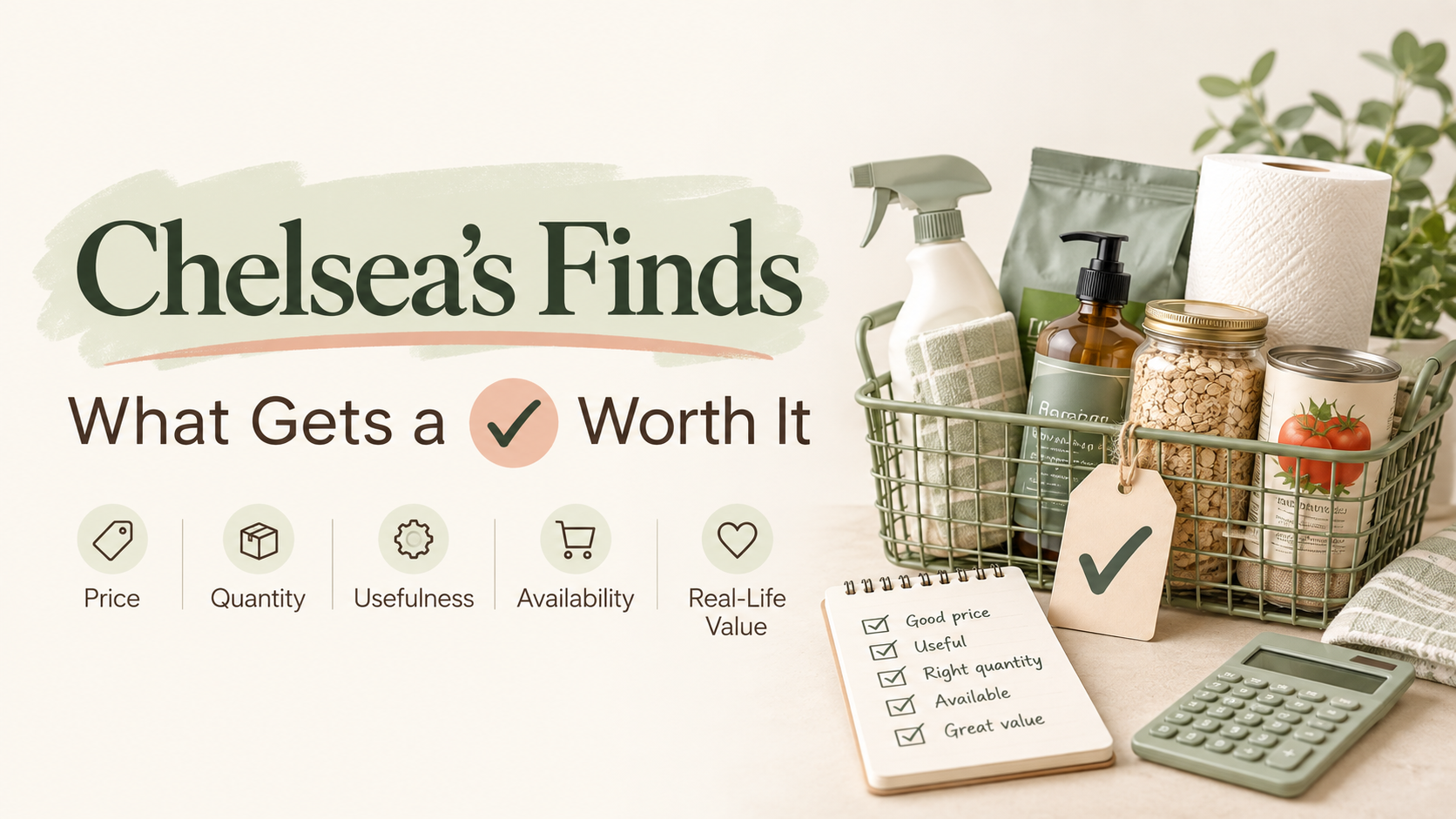
How Chelsea’s Finds Works: What Gets a ✓ Worth It
Chelsea’s Finds is not meant to be a list of things I think people should buy.
It is where I look at useful grocery, household and everyday products and ask a much simpler question:
Is this actually good value for what you get?
A low price can be useful, but price alone does not decide whether something deserves a recommendation.
The quantity, quality, normal price, likely use and available alternatives all matter too.
Quick takeawayA Chelsea’s Find earns attention because it offers useful value, not simply because it is cheap, popular or heavily advertised. I look at the real cost, what you receive for the money, whether the quantity makes sense and whether a better alternative exists before giving it a rating.Cheap and good value are not the same thingThe lowest-priced option can absolutely be the best buy.
But not always.
A cheaper product may need replacing sooner, require more product per use, come in an inconvenient quantity or simply not do the job well enough.
At the same time, a familiar brand name or attractive package does not automatically justify paying more.
The useful comparison is not simply between two shelf prices.
It is between what each option costs and what your household actually receives from it.
That is why Chelsea’s Finds can include inexpensive products, more expensive products and sometimes a recommendation to buy neither.
I look at what happens after you buy itGood value should still make sense once the product is in your home.
For groceries, that can mean whether the quantity will actually be eaten before it spoils.
For household products, it might mean how long the product lasts, how much is needed per use or whether a cheaper alternative performs just as well.
For storage or home items, durability can matter more than getting the lowest possible price today.
I also look at whether the product solves a real problem or simply creates another thing to store.
Buying something you do not need is not a saving just because the price was good.
The alternative mattersBefore something gets a positive rating, I also want to know what else your money could buy.
There may be a smaller pack with a similar unit price, a store-brand version that performs just as well, a more durable option that costs slightly more, or another retailer selling the same type of product for less.
Sometimes the product itself is perfectly fine, but the value is only good for certain households.
That is where the middle rating becomes important.
Not every product has to be either brilliant or terrible.
Sometimes the most useful answer really is: it depends.
Chelsea’s Value Check ✓✓ Worth it— Genuine value for the price, quantity and intended use.~ Depends — Can be worthwhile, but it depends on the household, quantity, quality or alternative options.× Skip — The advertised deal does not offer strong enough value compared with the alternatives.VALUE CHECK NOTE — Chelsea’s Finds uses this rating as a quick conclusion after looking at the normal price, unit value, useful quantity, waste risk, quality or durability, and realistic alternatives. A ✓ is not a guarantee that everyone should buy it — it means the value makes sense for the product and situation being reviewed.Quick checklist
- Is the price good compared with what this normally costs?
- Is the unit price or usable quantity good value?
- Will the quantity actually be useful?
- Is the quality or durability appropriate for the price?
- Is there a cheaper or better alternative?
- Would I still consider this product if there were no bright sale sticker or marketing claim?
Keep readingChelsea’s Finds will cover useful grocery, household and everyday products without assuming that the cheapest option is always best or that a brand name automatically deserves the premium. The aim is to make the comparison easier before the money leaves your pocket. -
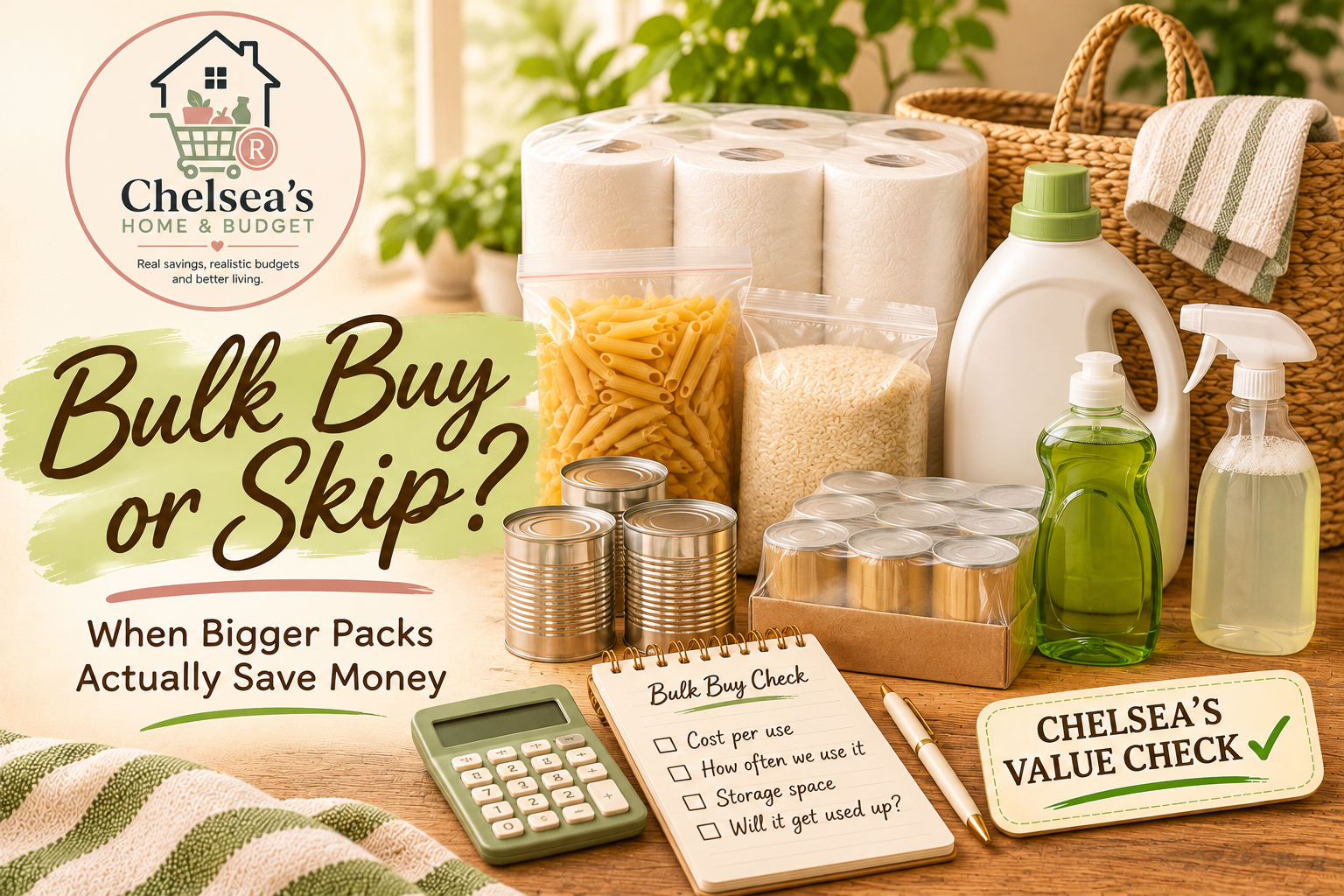
Bulk Buy or Skip? When Bigger Packs Actually Save Money
Buying the biggest pack on the shelf can feel like the obvious budget choice.
Sometimes it is.
But a larger pack only saves money when the unit price is actually lower, your household can use the quantity, and storing it does not create another problem.
Bulk buying is not automatically good budgeting. The goal is to buy more value, not simply more product.
Quick takeawayA bulk pack is worth considering when the price per kilogram, litre or usable unit is genuinely lower and your household will use the product before it expires or deteriorates. If the quantity creates waste, ties up money you need elsewhere or costs more per unit, the bigger pack is not the better deal.Start with the unit priceThe first thing to check is whether the larger pack is actually cheaper for the amount you receive.
A bigger packet can look like better value simply because it contains more product, but that does not guarantee a lower unit price.
Compare the price per kilogram, litre, 100 g, roll, tablet or other useful unit.
For example, if two packs contain different quantities, comparing the shelf price alone tells you very little. The smaller pack may cost less overall while the larger pack may cost less per kilogram — or the supermarket promotion may make the smaller packs the better buy.
The word bulk is not a value calculation.
The unit price is.
Make sure the quantity is usefulEven an excellent unit price can become poor value if your household cannot use the product.
Long-life staples, cleaning products, toilet paper and other items you regularly replace can be good candidates for bulk buying because they are unlikely to spoil quickly.
Fresh produce, short-dated food and products your household uses slowly need more caution.
Ask whether you have enough storage, whether the product will remain usable, and whether buying that quantity will actually reduce future spending.
There is also a difference between buying extra because the price is unusually good and buying extra because a large pack happens to be sitting in front of you.
A bargain that eventually ends up in the bin was never really a saving.
Do not let a bulk buy swallow the rest of the budgetBulk buying can reduce future costs, but it requires more money upfront.
That matters when the household budget still needs to cover fresh food, transport, electricity, toiletries, pet supplies or other essentials.
Spending a large portion of the month’s available money on one excellent deal can still leave the rest of the budget under pressure.
The best bulk purchases are usually products you already use consistently and would have needed to replace anyway.
It can also help to think about how long the purchase should last. If a large pack replaces several future purchases, part of its value is that you will not need to buy the item again next week or next month.
That is very different from buying a large quantity of something simply because it is discounted.
Chelsea’s Value Check ✓✓ Worth it— Genuine value for the price, quantity and intended use.~ Depends — Can be worthwhile, but it depends on the household, quantity, quality or alternative options.× Skip — The advertised deal does not offer strong enough value compared with the alternatives.VALUE CHECK NOTE — For bulk buys, I look at the unit price, normal price, useful quantity, storage, waste risk and whether the purchase makes sense within the rest of the household budget. Bigger is only better when the extra quantity is genuinely useful.Quick checklist
- Is the unit price actually lower than the smaller pack?
- Is this something my household already uses regularly?
- Can I store the full quantity safely and practically?
- Will we use it before it expires, deteriorates or gets forgotten?
- Does buying it now still leave enough money for the rest of the household’s needs?
- Is there a smaller pack or alternative that gives similar value without tying up as much money?
Keep readingBulk buying works best when it reduces future spending without creating waste or putting the rest of the month under pressure. Browse more Budget & Home guides for practical ways to compare prices, quantities and everyday household value. -
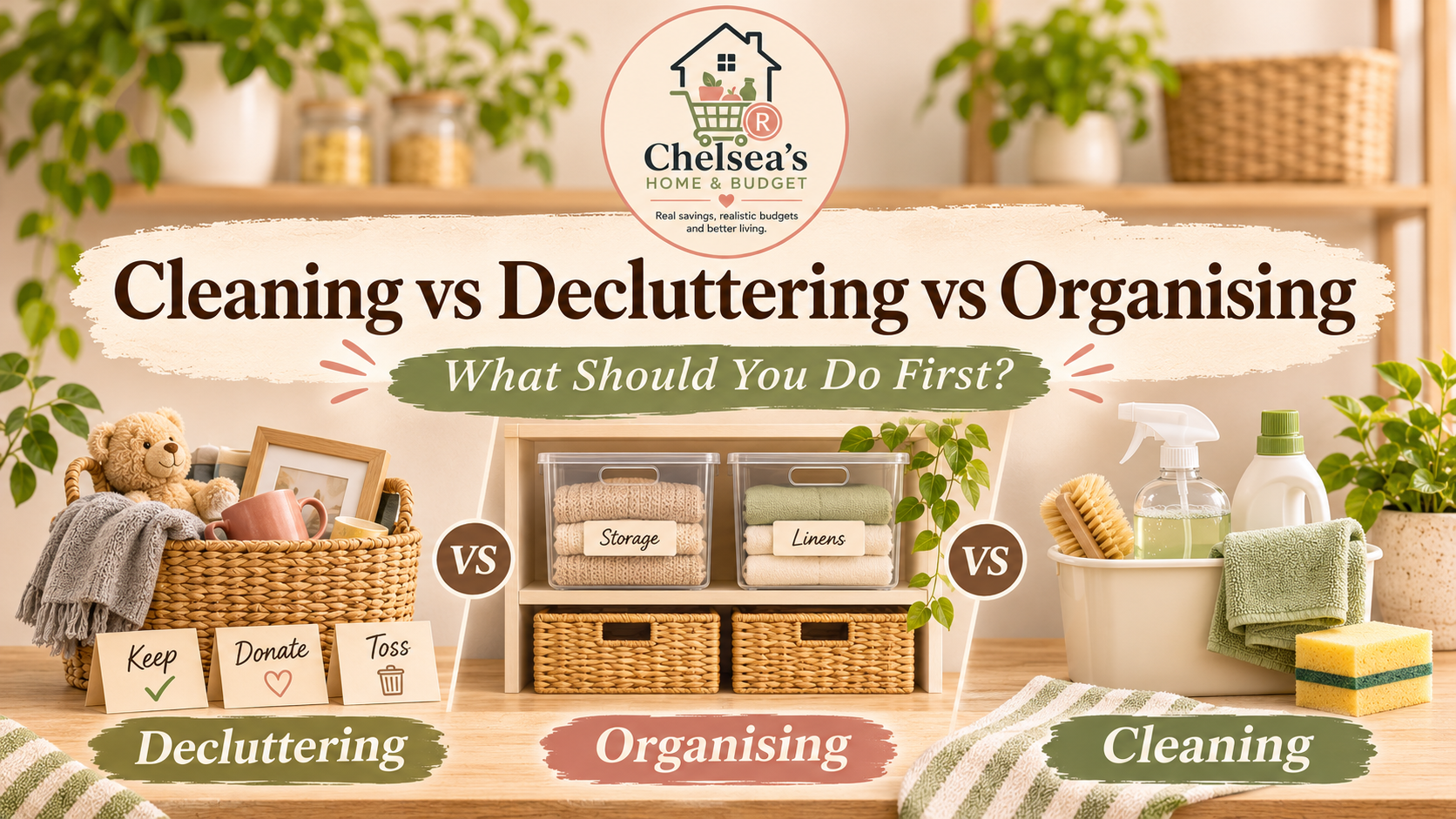
Cleaning vs Decluttering vs Organising: What Should You Do First?
Cleaning, decluttering and organising are often treated like the same job, but they solve different problems.
That matters because choosing the wrong one can turn a simple reset into hours of frustration.
If the room is dirty, organising will not fix it. If the room is overcrowded, cleaning around everything will only get you so far. And if everything is clean but nothing has a practical home, decluttering alone will not solve the daily mess.
The first step is figuring out which problem you actually have.
Quick takeawayCleaning removes dirt. Decluttering reduces what you own. Organising decides where the things you keep should live. Start with the problem that is making the space hardest to use, instead of trying to do all three at once.Cleaning: when the problem is dirtCleaning is about hygiene and visible dirt.
That includes washing dishes, wiping counters, cleaning bathrooms, vacuuming or sweeping floors, washing bedding, removing rubbish, and dealing with spills, dust or grease.
If a room is cluttered but the main problem is that it feels dirty or unhygienic, start with cleaning.
You do not need to reorganise cupboards or make decisions about every object first.
A useful cleaning reset can be as simple as clearing the obvious rubbish, collecting dishes, wiping one usable surface and cleaning the main floor path.
The goal is to make the space cleaner and easier to use.
Decluttering: when there is simply too muchDecluttering is about deciding what stays and what goes.
The problem here is not necessarily dirt. It is volume.
If cupboards are overflowing, drawers will not close, surfaces cannot stay clear, or you keep moving the same unused things from one place to another, the space may need decluttering more than organising.
Decluttering usually means deciding whether an item should be kept, donated, sold, recycled, discarded or moved somewhere more appropriate.
This is the stage where it helps to separate two different questions: “Do I need to keep this?” and “Where should this live?”
Organising too early can create very neat storage for things you do not actually need.
Organising: when the things you keep need a better homeOrganising comes after you know what you are keeping.
Its job is to make everyday items easier to find, use and put away.
Good organising is not about making a cupboard look perfect for a photograph. It is about creating a system that works on an ordinary day.
That can mean keeping frequently used items within easy reach, grouping similar things together, using baskets for loose categories, keeping cleaning products near the room where they are used, giving each shelf or drawer a clear purpose, and storing rarely used items further away.
A good organising system should reduce effort.
If putting something away requires several unnecessary steps, the system is probably too complicated for daily life.
Quick checklist
- Is the main problem dirt or hygiene? Clean first.
- Is the main problem too much stuff? Declutter first.
- Is the space clean enough and the amount manageable, but items still have no practical home? Organise.
- Are all three problems happening at once? Start with rubbish, dishes and hygiene, then reduce obvious excess, then organise what remains.
- Avoid trying to clean, declutter and organise every object at the same time
Keep readingA home does not need to be perfectly organised to work well.
The goal is to make everyday tasks easier and reduce the number of things you have to move, search for or think about.
Browse more Cleaning & Organisation guides for practical ways to make your space easier to manage.