
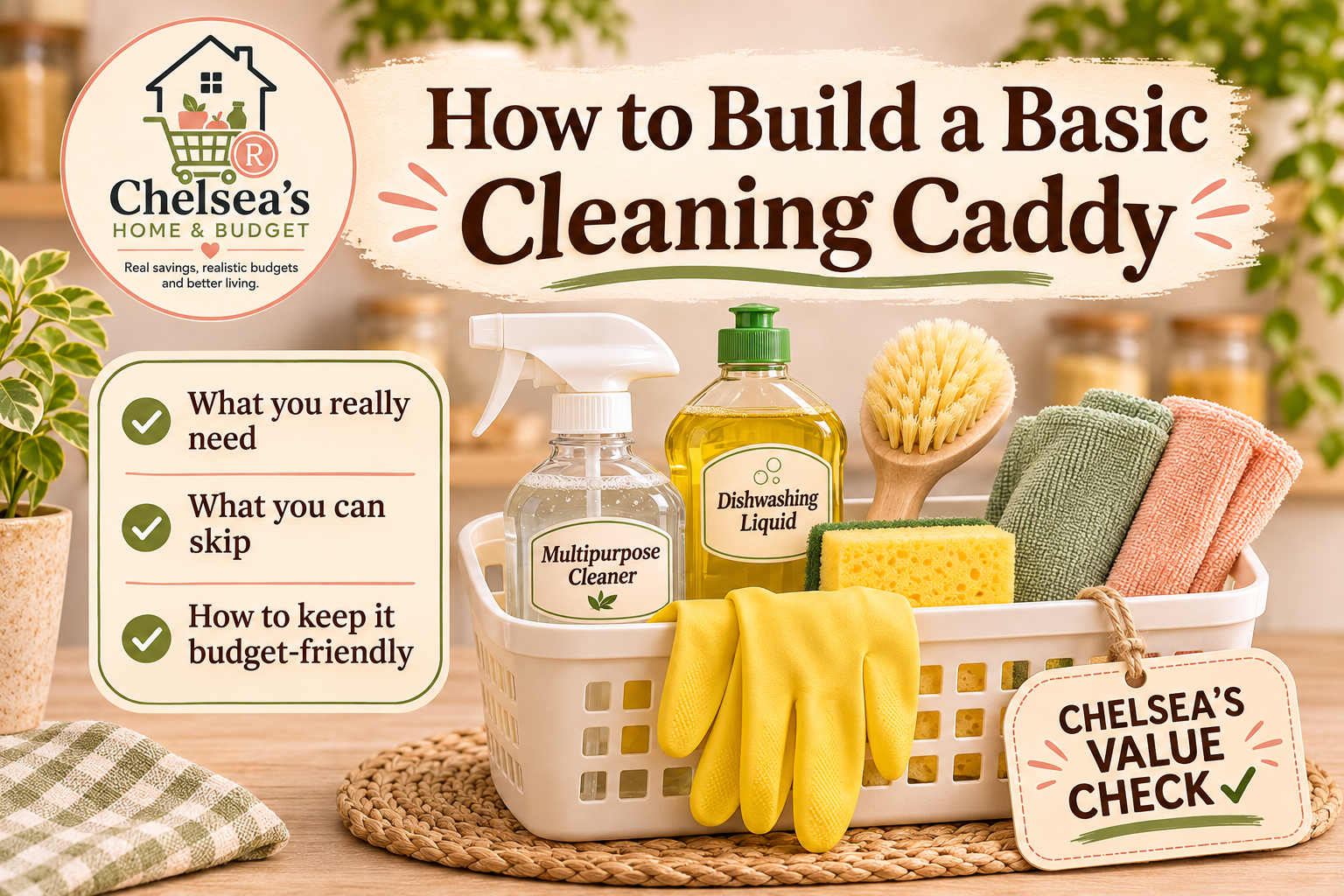
Keeping your home clean doesn’t mean you need a cupboard full of specialised cleaning products. A few carefully chosen supplies can handle most everyday cleaning jobs without taking up unnecessary space or stretching your household budget.
The trick is knowing what you actually need, what you can reuse and which products are worth buying only when a specific cleaning job calls for them.
Quick Takeaway
Start with a small collection of versatile cleaning tools and products. Use what you already own before buying replacements, avoid purchasing multiple products that do the same job, and only add specialised cleaners when your home genuinely needs them.
1. What Should Be in a Basic Cleaning Caddy?
For most households, these are sensible starting essentials:
- Multipurpose cleaner: Choose one suitable for several common washable surfaces, following the product label.
- Dishwashing liquid: Useful for washing dishes and certain light cleaning jobs when appropriately diluted.
- Microfibre cloths: Keep separate cloths for kitchens, bathrooms and other household areas.
- Scrubbing sponge or soft brush: For stubborn dirt on surfaces that can safely tolerate scrubbing.
- Cleaning gloves: Help protect your hands when working with cleaning products.
- A small caddy or container: Keeps supplies together and makes them easier to carry between rooms.
You don’t need to purchase a new container if you already have a suitable plastic basket, bucket or sturdy storage box.
2. Cleaning Products You Might Need — But Not Necessarily Every Week
Some products are useful for particular jobs, but they don’t all need to be part of your everyday cleaning kit.
- Toilet cleaner: For cleaning the toilet bowl according to the product instructions.
- Glass cleaner: Useful if your multipurpose cleaner leaves streaks on mirrors or windows.
- Floor cleaner: Only if it’s suitable for your particular flooring and offers a benefit over your existing cleaning method.
- Disinfectant: Appropriate when disinfection is required, rather than simply removing ordinary dirt.
- Descaler: For suitable surfaces affected by limescale or mineral deposits.
Buying these products should depend on your household’s actual needs, not how many different bottles are advertised as essential.
3. What Can You Skip?
Before adding another cleaning product to your shopping basket, ask whether something you already own does the same job.
Common examples of unnecessary spending include:
- Several multipurpose cleaners for the same surfaces.
- Separate cleaning sprays for every room when they offer no meaningful advantage.
- Specialised tools for jobs you rarely do.
- Disposable wipes when washable cloths would work just as well.
- Large refill packs of products you haven’t tried before.
- Extra fragrances or decorative cleaning accessories that don’t improve the cleaning result.
A product isn’t good value simply because it’s on special. If you already have enough to last several months, spending more today may not help your budget.
4. Build Your Cleaning Caddy Around Your Household
Not every home needs the same supplies.
For a small flat or limited storage space: Start with a multipurpose cleaner, dishwashing liquid, separate cleaning cloths, gloves and a small brush. Store larger bottles separately if necessary.
For a family home: Keep the everyday essentials together and store occasional-use cleaners in a separate, secure location. You may find it useful to have dedicated bathroom cloths and cleaning tools.
For a household with pets or young children: Prioritise secure storage and products appropriate for the surfaces being cleaned. Follow label precautions, keep animals and children away during cleaning where required, and allow surfaces to dry or rinse them as directed before access resumes.
5. Buy Less by Maintaining What You Already Own
Cleaning tools also need care.
- Wash reusable cloths regularly and according to their care instructions.
- Rinse brushes and allow them to dry.
- Replace damaged or heavily worn sponges when necessary.
- Check that spray bottles are working before purchasing replacements.
- Store cleaning products in their original labelled containers.
- Keep an eye on what is running low instead of buying duplicates.
Looking after your supplies can reduce waste and help them last longer.
6. Cleaning Safety Comes Before Saving Money
A cheaper cleaning method is never worthwhile if it creates a health or safety risk.
Never mix bleach with other cleaning products, particularly ammonia-containing cleaners, acids or toilet cleaners. Dangerous fumes can result.
Follow product labels for dilution, ventilation, surface compatibility and required contact times. Not every multipurpose cleaner is suitable for natural stone, untreated wood, electronics or delicate finishes.
Remember that cleaning and disinfecting are different tasks. Ordinary cleaning removes dirt and grime, while effective disinfection requires an appropriate product used according to its instructions.
Quick Checklist — Before Buying Another Cleaning Product
☐ Have I checked what I already own?
☐ Do I have another product that does the same job?
☐ Is this product suitable for the surface?
☐ Am I buying it because I need it or because it’s on special?
☐ Have I compared the price per litre or per use?
☐ Will I use the full quantity before it deteriorates or becomes unnecessary?
☐ Do I have somewhere safe to store it?
Keep Reading
Building a practical cleaning kit is only one part of keeping your home manageable without overspending.
Read Cleaning vs Decluttering vs Organising: What Should You Do First? to learn where to begin when your home feels overwhelming.
For more household shopping advice, see Bulk Buy or Skip? When Bigger Packs Actually Save Money before stocking up on cleaning supplies.
The aim is simple: buy what works, use what you own and avoid spending money on supplies that don’t improve your home.
Leave a Reply